
Stainless Steel Bench Thickness: Gauge and Load Ratings
Understand stainless steel bench load ratings before you buy. We cover gauge thickness, 0.8mm vs 1.2mm, weight capacity, and the right spec for your space.
BUYING GUIDES: RANGES, GRADES & PRICING
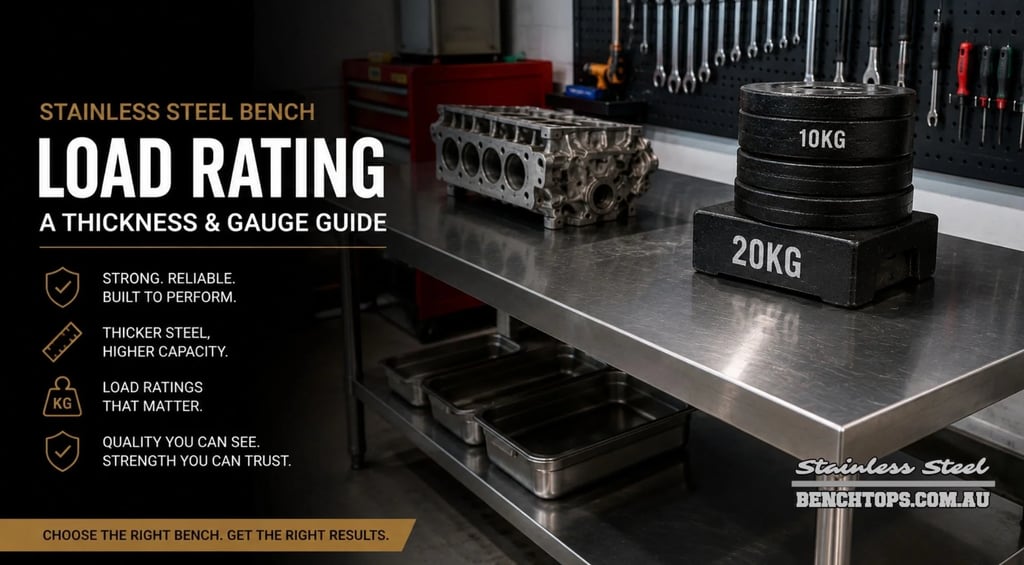
Stainless Steel Bench Load Rating: A Thickness and Gauge Guide
Understanding stainless steel bench load rating starts with one number most buyers never check: gauge thickness. It's the single biggest factor in how much weight a bench can carry, how much it flexes under pressure, and how long it holds its shape before sagging or denting becomes a problem.
This guide is for anyone specifying a stainless steel bench for genuine use rather than appearance - commercial kitchens, workshops, coolrooms and food processing areas where the bench needs to carry real, sustained weight. We'll break down what gauge actually means, how thickness translates into load capacity, how to work out what rating your situation needs, and a simple way to test a bench's rigidity before you commit to it.
TL;DR - Quick Answer
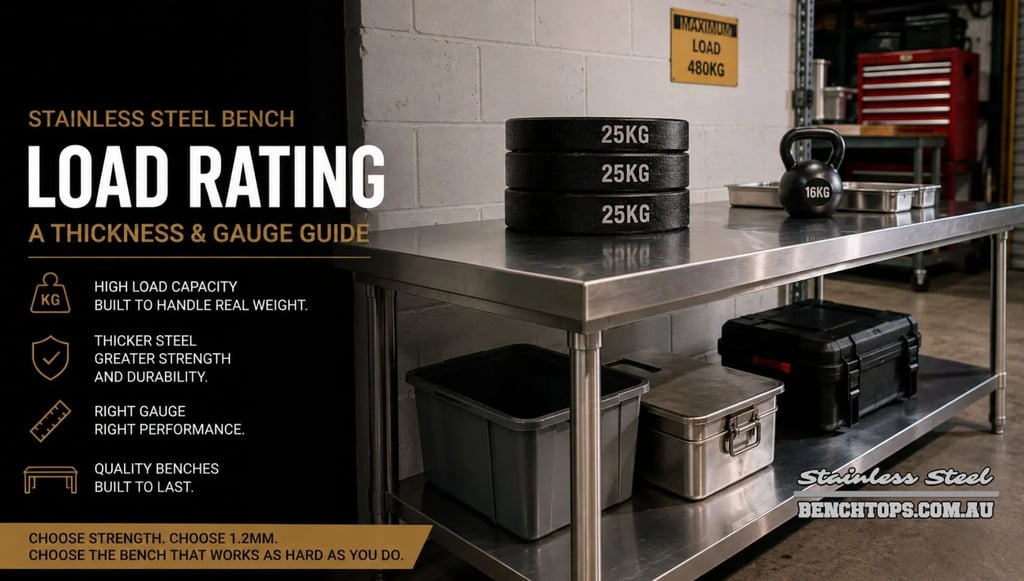
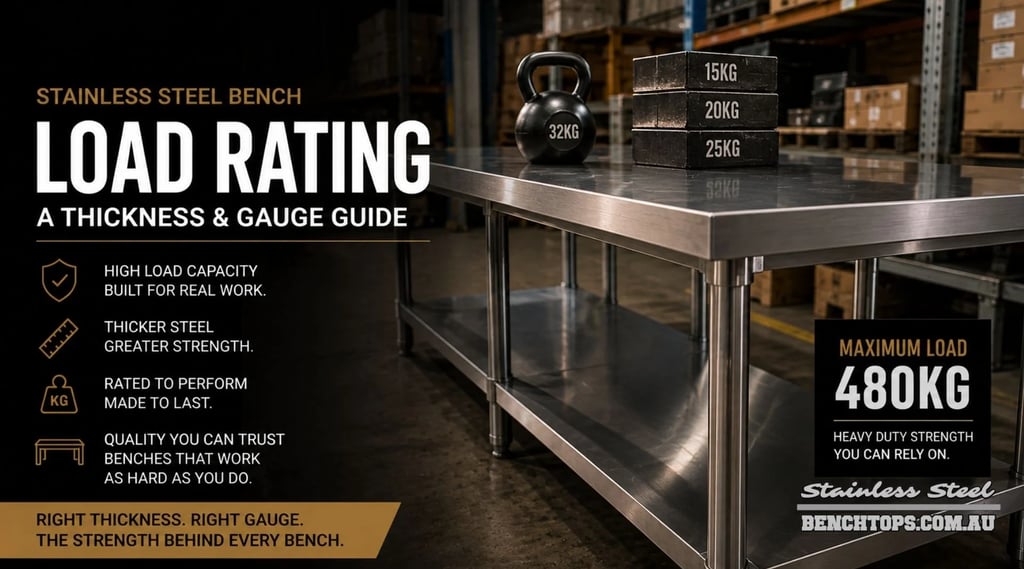
Bench thickness is measured in gauge, and lower gauge numbers mean thicker, stronger steel. A 1.2mm top (around 18-gauge) is the minimum we'd specify for any bench carrying genuine commercial or workshop load, supporting up to roughly 200kg on a properly braced Prosumer frame and up to around 480kg on larger Heavy Duty Commercial configurations. Anything thinner than 1.2mm, such as the 0.8mm to 0.9mm gauge used in Light Duty benches, is built for light, dry-use only and isn't rated for sustained heavy loading.
Stainless Steel Gauge Explained: Why Thickness Determines Bench Performance
Gauge is an old sheet-metal measurement system, and it's counterintuitive the first time you see it: the higher the gauge number, the thinner the steel. A 22-gauge sheet is thin enough to flex by hand. An 18-gauge sheet feels solid and barely moves. This is why "gauge" and "thickness" get used interchangeably in product specs, but it pays to know the actual millimetre figure rather than just the gauge number, since gauge standards vary slightly between sheet metal types.
For general reference, here's how the common gauges translate to millimetres:
0.8mm vs 1.2mm: Comparing Stainless Bench Thickness and Load Capacity
The clearest way to see what gauge actually buys you is to compare the two ends of the range side by side.
Thickness matters because it directly governs how much a benchtop deflects under load before it returns to flat, and how much abuse it takes before that deflection becomes permanent. A thin top can look identical to a thick one in a photo - the steel finish doesn't change with gauge - but the moment you load it with real weight, point-loaded items like pots, engine blocks or stacked containers, the difference becomes obvious fast.
It's worth being clear that gauge and grade are two separate specifications. Gauge (thickness) determines load capacity and rigidity. Grade, such as 304 versus 430, determines corrosion resistance and how the steel holds up to moisture and chemical exposure. A bench can be a high grade and still be a low gauge, and vice versa - you need to check both figures separately, not assume one implies the other.
How to Choose the Right Load Rating for Your Bench
Working out the right load rating isn't complicated, but it does take more than picking the gauge with the bigger number and assuming you're covered. Here's how we'd approach it.
Start with what actually sits on the bench day to day. A bench used for plating and light food prep has a very different load profile to one carrying full stockpots, mixing bowls loaded with batter, or engine components. Estimate the heaviest realistic combination of items you'll have on the surface at once, not just the heaviest single item.
Check the bench weight capacity against your real numbers, not just the headline figure. A "200kg capacity" rating usually refers to evenly distributed load across the full surface. A single heavy item sitting in one spot, like a commercial mixer or an engine block, behaves differently to the same weight spread out, and is more likely to cause localised flex or dishing over time if the gauge and bracing aren't sufficient.
Run a simple flex test before you buy, if you can. Press down firmly with your palm on the centre of the benchtop, midway between the legs or support points, where the span is least supported. On a properly specified 1.2mm top with adequate bracing, you should feel almost no give. Noticeable bounce or flex under firm hand pressure is a sign the gauge, bracing, or both are under-specified for what you're planning to put on it.
Match the undershelf or leg configuration to the load, not just the top. A solid undershelf adds meaningful rigidity to the whole frame, which is part of why Prosumer and HDCR benches rate up to 200kg and beyond - the undershelf isn't just storage, it's structural. A leg brace configuration trades some of that rigidity for floor clearance, which is the right call for airflow or storage underneath, but it's worth knowing that trade-off exists before you choose it for a heavy-load application.
Frequently Asked Questions
What is the best stainless steel bench load rating for commercial use?
For most commercial kitchens, workshops and food preparation areas, a 1.2mm gauge top on a Heavy Duty Commercial or Prosumer Premium frame is the load rating we'd recommend. This supports up to roughly 200kg on Prosumer configurations and up to around 480kg on larger Heavy Duty Commercial setups, depending on size and undershelf configuration. Anything below 1.2mm gauge isn't rated for sustained commercial loading.
What's the difference between a stainless steel gauge chart figure and the actual bench weight capacity?
The gauge chart tells you how thick the steel sheet itself is, which determines how much the surface flexes and resists denting on its own. The bench weight capacity is a separate figure that accounts for the gauge plus the frame, bracing and undershelf configuration working together. Two benches with the same gauge top can have different weight capacities if one has a solid undershelf adding structural rigidity and the other has a leg brace configuration without it.
Is a thicker stainless steel bench always better than a thinner one?
Thicker generally means more rigid and more resistant to denting, but it's not the only factor worth weighing up. A 1.2mm top with solid bracing comfortably covers the vast majority of commercial and workshop needs, and stepping up further usually adds cost and weight without a meaningful practical benefit unless you're dealing with unusually heavy, concentrated point loads. The right gauge is the one matched to your actual use, not simply the highest number available.
How much does a 1.2mm stainless steel bench cost compared to a lighter gauge option?
Light Duty benches at 0.8mm to 0.9mm gauge typically start from around $150, while 1.2mm gauge Prosumer benches start from around $190 and Heavy Duty Commercial benches start from around $320, with pricing scaling up based on size, grade and configuration. The difference reflects both the thicker steel and the more substantial welded frame and bracing that goes with it, which is what delivers the higher load rating.
Load Ratings for Commercial Kitchens, Workshops and Coolrooms
Different environments put different demands on a bench's load rating, even when the surface area looks similar.
Commercial kitchens typically need consistent, evenly distributed capacity across the whole bench, since prep work involves multiple pots, trays and ingredients sitting on the surface simultaneously throughout service. This is the standard use case for the Heavy Duty Commercial Range, where the 1.2mm 304-grade top and fully welded frame are built specifically for sustained daily loading under food safety conditions.
Workshops and garages tend to see more point-loading - an engine, a vice, a stack of parts in one concentrated spot rather than spread evenly. This is where bracing matters as much as gauge, since a single heavy item in one area stresses the frame differently to distributed weight. A solid undershelf configuration adds the rigidity most workshop applications need.
Coolrooms and food storage areas carry their own load consideration: shelving and benches in these spaces often hold densely packed stock for extended periods, which means sustained load rather than the intermittent loading of a prep bench. Specifying the correct gauge here matters because any sag that develops over months of constant loading is far harder to notice early than a sudden overload would be.
Across all three settings, the rule holds: match the bench's gauge and configuration to your heaviest realistic, sustained load, not your lightest typical day.
The practical takeaway is that thickness and bracing work together. A 1.2mm top spread across a long, unsupported span will still flex more than the same gauge on a shorter span with a centre leg or extra cross-bracing. That's why bench length and undershelf or leg configuration matter just as much as the gauge figure on its own - the frame is doing as much work as the steel.
Get the Load Rating Right Before You Order
The takeaway worth remembering is this: gauge thickness, frame bracing and undershelf configuration all work together to determine a bench's real load rating, not the gauge figure in isolation. For commercial kitchens, workshops and coolrooms carrying genuine daily weight, 1.2mm gauge on a properly braced Prosumer or Heavy Duty Commercial frame is the specification to look for, and it's worth running the flex test in person wherever you can before you commit.
If you're specifying a bench for a heavy-load application and want to confirm the right gauge and configuration for your space, browse the full range of stainless steel benchtops and equipment, or call 0403 741 781 - available seven days a week - for a straight answer on what rating actually suits your load.
Get Trade Deals and Clearance Alerts
No spam, just occasional deals, new arrivals, and restock updates.


Unsubscribe anytime.
Buy Now Pay Later
Why Us?
100% Satisfaction Guaranteed On All Orders
Free Metro Delivery
Australian Support
Secure Checkout (Card or PayPal)


© 2026 StainlessSteelBenchtops.com.au. All rights reserved.