
How to Clean a Stainless Steel Benchtop | Care Guide
Learn how to clean a stainless steel benchtop the right way - daily care, ammonia-free products, and how to treat rust spots, water marks and scratches.
CARE & MAINTENANCE
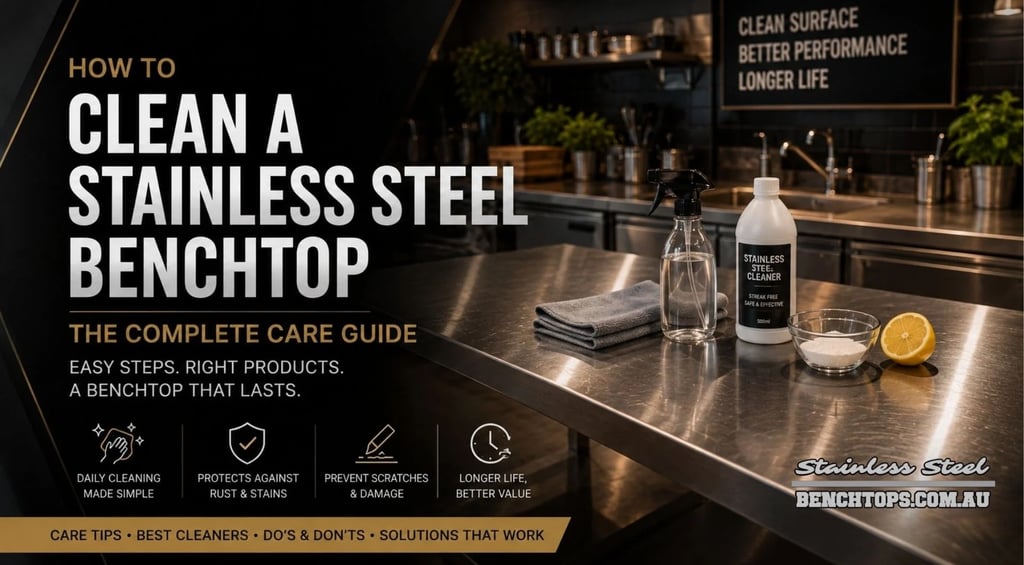
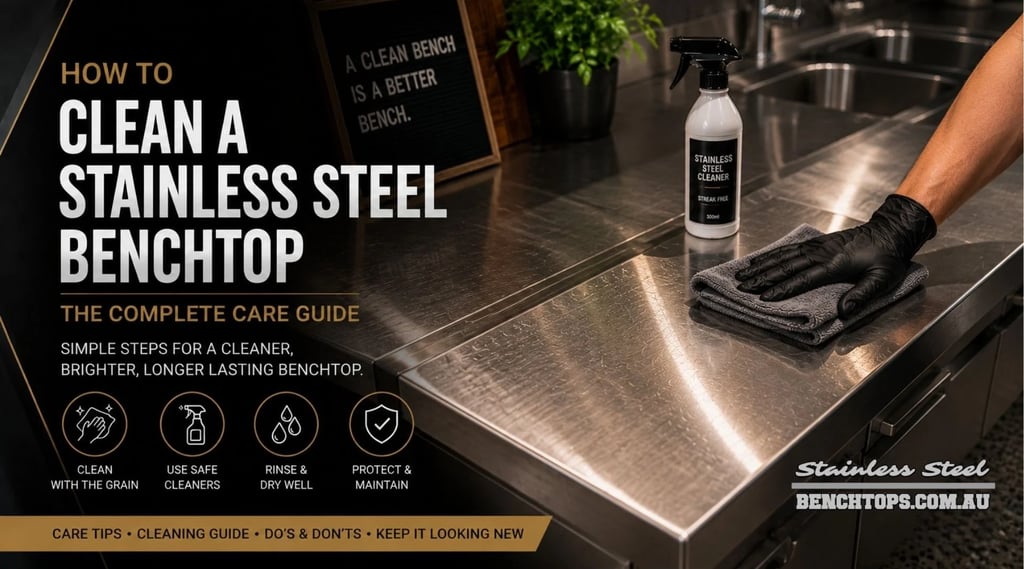
How to Clean a Stainless Steel Benchtop: The Complete Care Guide
Knowing how to clean a stainless steel benchtop properly is the difference between a bench that still looks new after ten years and one that's covered in streaks, water spots and faint scratches within twelve months. It's a simple routine once you know it, but most of the damage we see on stainless steel benches in Australian homes and kitchens comes from people using the wrong tool or the wrong chemical without realising it.
This guide is written for home cooks, cafe owners, commercial kitchen staff and anyone who owns a stainless steel bench and wants it to actually last. We'll cover the daily cleaning routine that prevents most damage in the first place, how cleaning needs differ between 304 and 430-grade steel, how to deal with rust spots, water marks and scratches when they do show up, and how commercial kitchens should approach sanitising versus a home setup.
TL;DR - Quick Answer
Clean stainless steel with warm water, a mild dish detergent and a soft microfibre cloth, always wiping with the grain - never across it. Dry the surface completely afterwards to stop water spots and corrosion forming. Never use steel wool, abrasive scourers or chlorine-based cleaners; they damage the protective oxide layer that keeps stainless steel from rusting. For stains, a vinegar and baking soda paste handles most rust spots and water marks without harming the finish.
Stainless Steel Bench Maintenance: The Daily Habit That Actually Matters
Stainless steel is often sold as low maintenance, and it is, but "low maintenance" isn't the same as "no maintenance." The surface holds up to constant use, moisture and cleaning products far better than timber, laminate or stone. What it doesn't tolerate well is the wrong cleaning method repeated day after day.
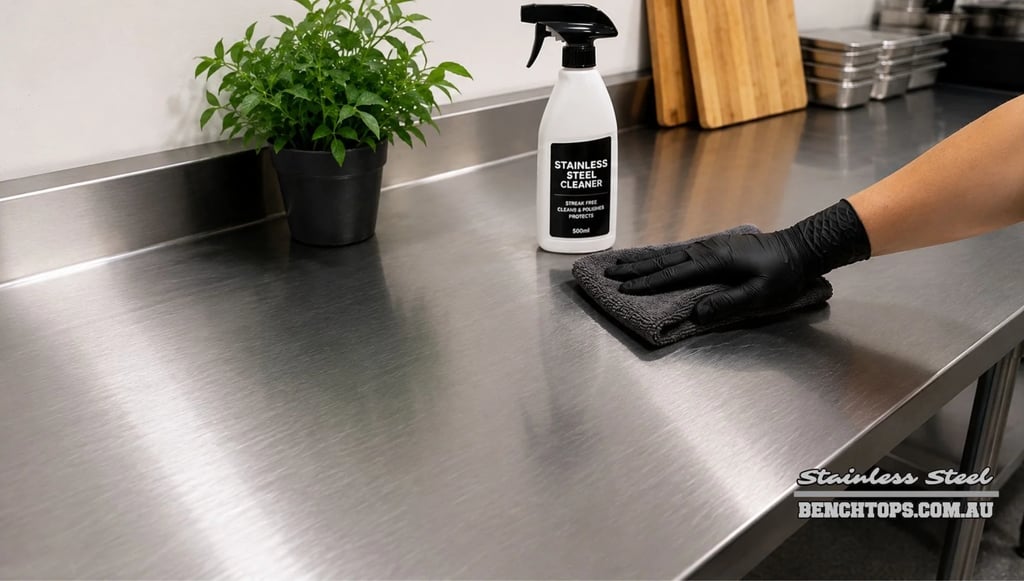
The habit that matters most is simple: warm water, a mild dishwashing detergent, and a soft microfibre cloth, wiped with the grain rather than across it. Every stainless steel benchtop has a visible grain - fine parallel lines running in one direction across the surface. Wiping across that grain is the single most common cause of fine scratches and streak marks on stainless steel, because the cloth catches against the texture instead of gliding along it. Run your hand lightly across the surface if you're not sure which way the grain runs, and clean in that direction.
After washing, dry the surface properly with a separate clean, dry cloth. This step gets skipped more than any other, and it's the one most likely to cause long-term damage. Leaving a wet film on stainless steel - particularly in a humid Australian kitchen - allows mineral deposits and soap residue to sit on the surface, which is exactly what causes water spots and, over time, can start to compromise the steel's natural corrosion resistance.
Stay away from steel wool, scouring pads and chlorine-based cleaners (bleach is the main one to watch for) entirely. Steel wool leaves microscopic particles embedded in the surface that rust on their own and bleed onto the bench. Chlorine attacks the passive chromium oxide layer that gives stainless steel its corrosion resistance in the first place, leading directly to pitting. Never mix cleaning products together, including the vinegar and baking soda method below with anything bleach-based - combining bleach and vinegar produces toxic chlorine gas.
304 vs 430 Grade: Does Cleaning Method Change by Steel Type?
The daily cleaning routine is the same regardless of grade. What changes is how forgiving each grade is when something goes wrong, and how often you need to be careful.
If you've got a 304-grade Heavy Duty bench, you have more margin for error - it handles commercial sanitisers, acidic food contact and humid conditions without much fuss. If you're working with a 430-grade bench, the same daily routine applies, but you'll want to be more diligent about drying it fully after each clean and avoiding any chloride-based products altogether, since 430 has no nickel content to slow down corrosion once the surface is compromised. For a full breakdown of what separates the two grades, our 304 vs 430 stainless steel guide covers it in more depth.
How to Remove Scratches, Rust Spots and Stains from Stainless Steel
Before trying any method below, test it on a small, inconspicuous area first - especially if your bench has a mirror or high-polish finish rather than a standard brushed finish. Results can vary depending on the finish type and the age of the steel.
Many surface marks on a stainless steel bench respond well to these methods, provided you use the right technique and avoid anything abrasive. They're best treated as a first effort rather than a guarantee - here's how to work through the common ones.
Step 1 - Identify what you're actually dealing with. Surface rust spots are usually small, orange-brown and sit on top of the steel rather than pitting into it. They're almost always caused by something else (a steel wool pad, a tin can, a rusty utensil) leaving contamination on the surface rather than the steel itself rusting. Water marks and limescale appear as chalky white streaks, common in hard water areas. Scratches are visible grooves, usually running against the grain.
Step 2 - Treat rust spots with a baking soda and vinegar paste. Mix baking soda with a small splash of white vinegar into a paste, apply it to the rust spot, and let it sit for 15 to 20 minutes. Scrub gently with a soft cloth or a non-scratch microfibre applicator, working with the grain, then rinse thoroughly and dry completely. Avoid anything with a textured or fibrous surface, including kitchen sponges and scouring pads, as these can leave fine scratches even when marketed as gentle. This lifts the rust without damaging the surrounding finish.
Step 3 - Treat water marks and limescale with diluted vinegar. Mix white vinegar with an equal part of water, wipe it onto the affected area, and leave it for five to ten minutes to break down the mineral deposits. Rinse with clean water, wipe with the grain, and dry immediately.
Step 4 - Blend out minor scratches with a non-metallic pad. Use light pressure and long, steady strokes along the grain direction - not across it. The goal isn't to remove the scratch entirely but to blend the surrounding finish so it's no longer visible at a glance. Patience matters more than pressure here; pushing harder just widens the mark.
Step 5 - Finish with a light coat of mineral oil. Once the surface is clean and completely dry, apply a small amount of food-grade mineral oil or a specialised stainless steel oil with a soft cloth, working with the grain, then buff with a separate dry cloth to remove any excess. This creates a light protective barrier, reduces fingerprint visibility and gives the bench a streak-free, even sheen.
Cleaning Stainless Steel Benches in Commercial Kitchens vs Home Kitchens
The underlying method doesn't change between a home kitchen and a commercial one, but the frequency and the standard you're cleaning to does.
In a home setting, a daily wipe-down after use and a slightly more thorough clean once a week is generally enough to keep a stainless steel benchtop looking and performing well for decades. Most home benches see moderate moisture exposure and standard household cleaning products, which both 304 and 430-grade stainless steel handle comfortably as long as the basic routine is followed.
A commercial kitchen is a different environment entirely. Benches get wiped down multiple times per shift, often with commercial-grade sanitisers required under food safety regulations, and they're exposed to acidic food matter, steam and constant moisture throughout service. This is precisely why 304-grade Heavy Duty benches are the standard specification for any licensed food business - they're built to be sanitised repeatedly without the surface degrading. When sanitising a commercial bench, use a food-safe, chlorine-free sanitiser specifically formulated for stainless steel where possible, apply it according to the product's contact-time instructions, then rinse and dry the surface before returning it to service. Skipping the dry step in a commercial setting causes the same water-spotting and long-term dulling it does at home, just faster, given how often the surface gets wet.
For commercial operators managing multiple benches across a kitchen, building the dry-and-wipe step into the end-of-shift routine - rather than treating it as optional - is what separates a bench that still looks commercial-grade after five years from one that looks tired after eighteen months.
Frequently Asked Questions
How do I clean a stainless steel benchtop without leaving streaks?
Use warm water with a mild dishwashing detergent and a soft microfibre cloth, always wiping in the direction of the grain. Streak marks almost always come from wiping across the grain or from leaving the surface to air-dry instead of drying it with a separate clean cloth. If streaks persist, a small amount of ammonia-free glass cleaner applied with the grain and buffed dry usually clears them.
What's the best ammonia-free cleaner for a stainless steel bench?
For everyday cleaning, a mild dishwashing detergent diluted in warm water is sufficient and won't risk damaging the surface. For fingerprints and light smudges, an ammonia-free glass cleaner applied sparingly with a microfibre cloth works well, since ammonia-based products can dull the finish over repeated use. Avoid anything labelled as containing bleach or chlorine, regardless of how it's marketed for kitchen use.
Will cleaning chemicals damage my stainless steel benchtop over time?
Most standard household and commercial cleaning chemicals are safe for stainless steel when used correctly and rinsed off. The chemicals that cause genuine damage are chlorine and bleach-based products, which break down the passive oxide layer that gives stainless steel its corrosion resistance, and harsh abrasive powders, which physically scratch the surface. If you stick to mild detergents, food-safe sanitisers and avoid anything chlorine-based, your bench's finish and corrosion resistance will hold up for years.
How much does it cost to restore a scratched or rusted stainless steel benchtop?
Most surface rust, water marks and light scratches can be handled at home with ingredients already in most kitchens - baking soda, white vinegar and a soft cloth - so there's typically no cost involved beyond a few minutes of work. For deeper scratches, heavy pitting, or any damage that doesn't visibly improve after one careful attempt, stop and contact a professional restoration service rather than repeating the process - repeated scrubbing on the same spot is what tends to cause permanent damage. If a bench has reached the point where restoration costs start approaching the price of a new one, it's worth comparing against a replacement Heavy Duty or Prosumer bench instead.
Keep Your Bench Looking Like New
The core of stainless steel bench maintenance comes down to three habits: always wipe with the grain, dry the surface completely after every clean, and keep steel wool and chlorine-based products away from it entirely. Get those three right and most benches will go years without needing any kind of restoration work.
If your bench has gone past routine cleaning and needs real attention - or if years of wear mean it's time to upgrade to a tougher 304-grade build - browse our full range of stainless steel benchtops and equipment to compare options suited to your kitchen or workspace.
Got a specific stain or stubborn mark you're not sure how to handle? Call 0403 741 781 - available seven days a week - and we'll talk you through it.
Get Trade Deals and Clearance Alerts
No spam, just occasional deals, new arrivals, and restock updates.


Unsubscribe anytime.
Buy Now Pay Later
Why Us?
100% Satisfaction Guaranteed On All Orders
Free Metro Delivery
Australian Support
Secure Checkout (Card or PayPal)


© 2026 StainlessSteelBenchtops.com.au. All rights reserved.